The Plant Nobody Throws Away: Living With Tulsi, Goa's Most Loyal Houseguest
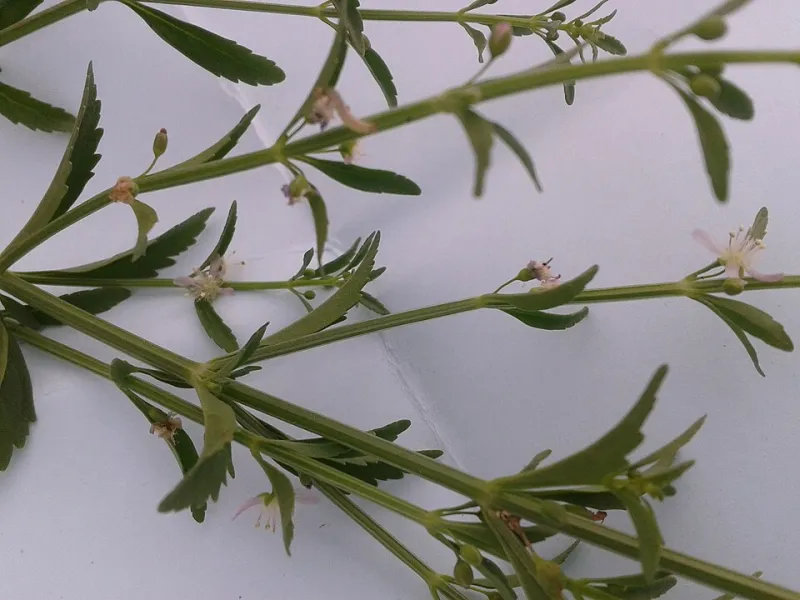
Photo: Dr.S.Soundarapandian, Public domain, via Wikimedia Commons
Every American apartment I've ever had featured the same quiet cycle: buy a pothos, admire the pothos, forget the pothos, apologize to the pothos, throw away the pothos, repeat. We treat houseplants as disposable soft furnishings with a mortality rate.
Then I went to Goa, and stayed at a guesthouse where the owner, a retired teacher named Sushila, introduced me to a plant the way you'd introduce a relative. "This is my tulsi," she said. "She was my mother-in-law's."
She. Not "it." I'd learn why quickly.
The Throne in the Courtyard
Walk through any traditional Goan neighborhood — the Latin Quarter in Panjim, the village lanes of Loutolim — and you'll spot them: small raised pedestals, often carved laterite stone or painted cement, standing in the front courtyard with a leafy green shrub on top. That's a tulsi vrindavan, a kind of altar built for one plant.
Architecturally, it's fascinating. The tulsi throne is usually placed to catch the morning sun, positioned so that the household's daily rhythm literally orbits around it. It's a design element that dictates circulation: you can't enter many traditional homes without walking past it, often touching it. It's landscaping as devotion. Frank Lloyd Wright wanted architecture to organize family life; Goan courtyards have been doing it with a basil plant for centuries.
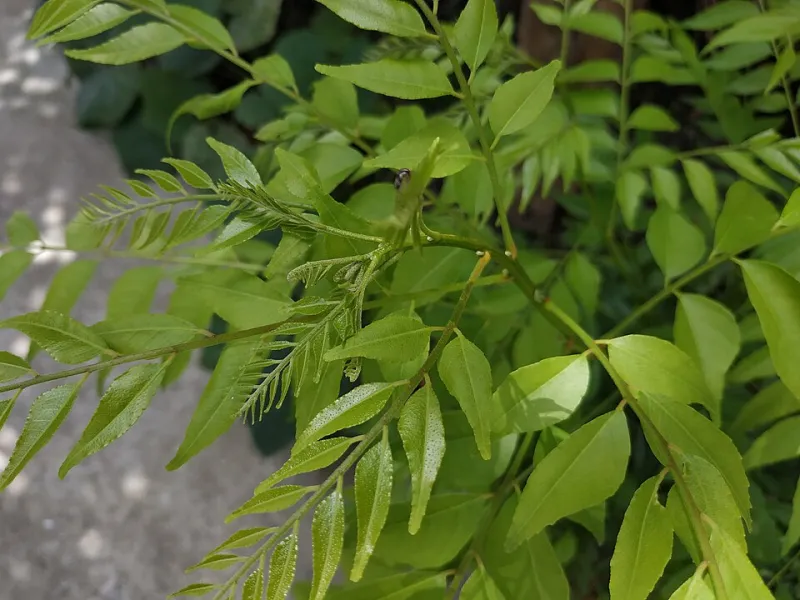
The plant itself, holy basil (Ocimum tenuiflorum), looks like a slightly wilder cousin of the supermarket stuff — fuzzy stems, purple-tinged flower spikes, a clove-like scent that hits you from a foot away.
A Daily Appointment, Kept for Decades
Here's where the "family member" framing stops being a metaphor.
In many Goan households, tulsi gets watered at dawn, often by the same person, every day, sometimes for decades. Sushila described her mother-in-law's routine like a liturgy: light the lamp at the base of the pedestal at dusk, water at sunrise, keep the courtyard swept so fallen leaves aren't trampled. During the monsoon planting month of Ashadha, some families perform a symbolic wedding of the tulsi to a Vishnu idol. There are songs. There is, in some villages, actual catering.
The stories are the part that stuck with me. Hosts told me about tulsi plants descended — by cuttings — from a grandmother's original, the way American families talk about a cast-iron skillet or a wedding ring. One guesthouse keeper in Assagao traced his courtyard plant back four generations. Nobody in my family can tell me where our couch came from.
The Anti-Disposable Houseplant
You can see why this resonates with a culture that buys a fiddle-leaf fig and abandons it in eight months. Tulsi culture is the exact inverse: one plant, tended daily, propagated forward, mourned when it dies and ceremonially replaced — the old plant's soil often returned to a river or garden, its stem reused, nothing wasted.
It reframes what a houseplant can be. Not an accessory, but a schedule. A reason to step outside first thing in the morning. A small daily obligation that is also, quietly, a meditation.
How Guesthouses Are Bringing Guests In
The best garden retreats in Goa don't just have a tulsi — they invite you into the routine. At a few boutique stays I visited, the morning ritual looks like this:
- Guests gather at the tulsi vrindavan around 6:30–7 a.m., when the light is low and the air still cool.
- The host waters the plant and explains the ritual — no pressure to participate, but everyone gets offered the chance to pour.
- Fresh tulsi leaves go into the morning tea. It tastes like cloves and pepper and smells like a temple courtyard.
- Fallen leaves are never swept into the trash; they're returned to the soil at the base of the pedestal.
It's a ten-minute practice, and it's the single best alarm clock I've encountered. No phone. No scroll. Just light, water, a fragrant leaf, and a plant that has outlived everyone who first watered it.
Try This at Home
You can grow tulsi in the US — it's sold as holy basil seed or starter plants, thrives in a sunny pot, and overwinters indoors in colder states. But the Goan lesson isn't really horticultural. It's this: pick one plant, put it somewhere you pass every morning, and give it a schedule you keep. Name it if you want. Sushila would approve.
The plant will not care. You will.