What the Temple Trees Know: A Fragrance Map of Goa's Sacred Gardens
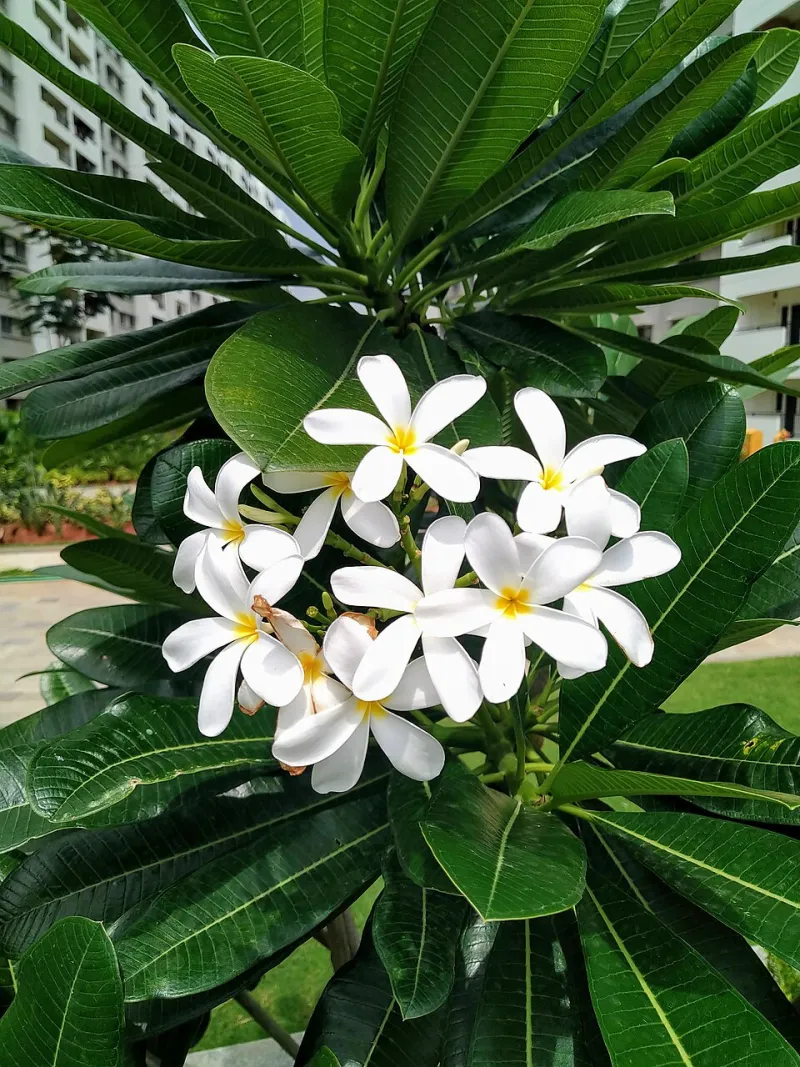
Photo: SlowPhoton, CC BY-SA 4.0, via Wikimedia Commons
Stand in the courtyard of a Goan temple at six in the morning and you'll notice something odd about the way people pray. Before anyone folds their hands, they stop at a tree. They cup a blossom that has fallen overnight, breathe it in, and only then walk toward the sanctum.
That pause at the tree is the whole point. In Goa's Hindu temples, the garden isn't landscaping. It's inventory — a living shelf of offerings, planted and pruned over centuries so that something fragrant is always in season. Once you understand that, temple-hopping here changes completely. You stop reading the architecture and start reading the air.
The Planting Plan Behind the Prayers
Temple gardeners in Goa work to a logic older than any nursery catalog. Each species earns its place by what it can give: flowers for the deity, leaves for garlands, scent to mark the hours.
Frangipani (plumeria) is the anchor. The pale, waxy flowers drop at dawn — deliberately, botanically — so the courtyard is carpeted before the first puja. Priests gather them while they're still cool. In the US, you may know plumeria as the flower on every lei in Honolulu; here it carries a similar weight, but with a milky, almost citrus edge that intensifies in the heat.
Jasmine, especially the small-flowered juhi and the fat-budded mogra, is picked not fallen. Women arrive at the temple gates before sunrise selling strings of it, and the buds open through the day so the garland on the shrine grows more fragrant as the morning goes on. It's the same arabica jasmine behind Chanel No. 5 — Goa grows it as a household crop.
Hibiscus is the workhorse. Red hibiscus is offered to Shiva specifically, and the bushes are trimmed into low hedges along courtyard walls so a fresh bloom is always within arm's reach. A single flower, offered and gone by afternoon.
Then the supporting cast: marigold for volume and color, oleander (kaner) in the outer courtyards, and the odd champak tree whose orange blossoms smell, to my nose, like expensive tea.
Design Lessons Hiding in Plain Sight
If you're the kind of traveler who photographs courtyard floors — and if you're reading this site, you probably are — Goa's temple gardens are a masterclass in scented architecture.
The layout follows a deliberate sequence. You pass through a scented threshold (often frangipani or champak), cross an open paved courtyard that gives your nose a rest, then approach the sanctum where the concentrated smell of jasmine garlands and camphor takes over. It's the same contrast-and-release structure a perfumer uses. The garden manages your attention before the ritual does.
There's a practical lesson for anyone gardening at home, too. These are all low-input, high-reward plants: drought-tolerant once established, flowering on old wood, happiest in poor soil. A frangipani in a pot on a southern California patio behaves almost exactly like one in Ponda.
A Bloom Calendar for Planning Your Trip
Goa doesn't have four seasons so much as two acts — wet and dry — but the temple gardens run on a finer clock. Here's how to time a visit:
November–January (peak season, peak scent). Cool, dry mornings concentrate fragrance beautifully. Jasmine is abundant, frangipani still flowers through the mild winter, and the famous marigold season fills every courtyard with orange. This is when the gardens smell like the postcard. It's also when everyone else visits — go at dawn.
February–March. My favorite window. The crowd thins after the winter holidays, champak and oleander take over from the winter bloomers, and the heat begins to swell the plumeria. Temples like the ones around Ponda and Bandora are at their most atmospheric in late afternoon light.
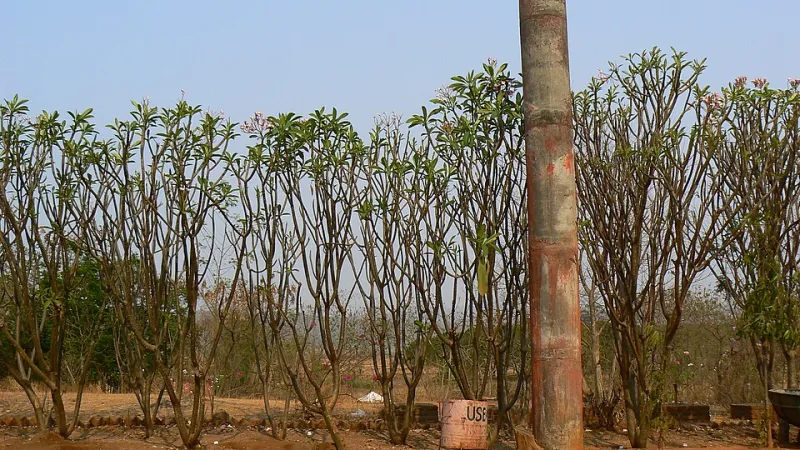
April–May (hot, but worth it). Frangipani goes into overdrive — the trees look half-bare and completely covered in flowers at once. Hibiscus loves the heat. Visit early, drink coconut water, repeat.
June–September (monsoon). Many flowers pause, but the garden turns luminous green, and jasmine actually thrives in the humidity. If you want the gardens to yourself and don't mind a rain jacket, this is the connoisseur's season.
How to Visit Like a Guest, Not a Tourist
A few courtesies go a long way. Most Goan temples welcome respectful visitors — shoulders and knees covered, shoes left at the gate. Photograph the courtyards where permitted, but never the sanctum. And please don't pick anything; the fallen flowers are fair game for a photograph, and the growing ones have an appointment.
If you stay at a garden-focused guesthouse inland — the kind with frangipani over the walkway and jasmine by the door — ask the hosts which village temple they attend. A morning walk there, ideally with someone who can tell you which tree is which, will teach you more about Goan design than any museum.
You'll come home with the usual souvenirs, sure. But the thing that stays is stranger and better: a nose trained to expect frangipani at dawn. Every plumeria you pass afterward — a hotel lobby in Miami, a neighbor's yard in Austin — will briefly be a Goan courtyard at six in the morning.