Sacred Geometry Under Palm Fronds: The Quiet Genius of Goa's Temple Courtyards
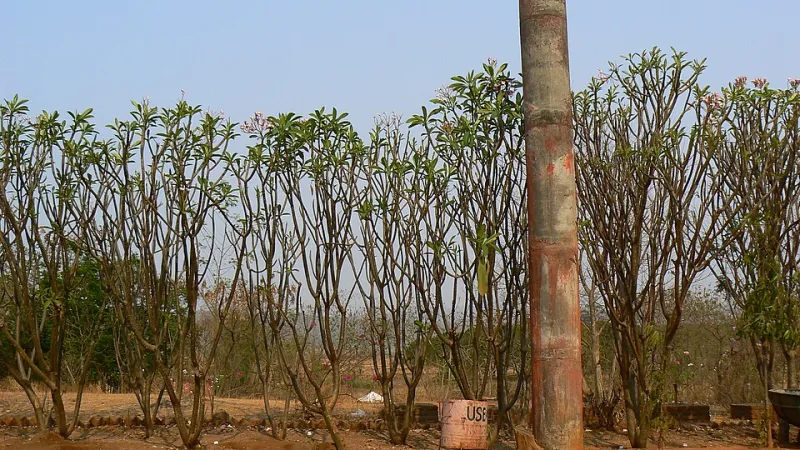
Photo: Dinesh Valke from Thane, India, CC BY-SA 2.0, via Wikimedia Commons
There's a moment that hits you about ten seconds after stepping into a well-designed Goan temple courtyard. The noise of the road disappears. The temperature drops a few degrees. Your shoulders, without any conscious instruction from you, come down from around your ears.
That moment isn't an accident. It's architecture.
The Blueprint Behind the Bliss
Temple gardens across India — and Goa is no exception — are built on principles of sacred geometry. Walk into a traditional courtyard and notice the layout: a central point, often marked by a tulsi (holy basil) planter, a small shrine, or a water feature, with everything else radiating outward in careful balance. The design mirrors mandala patterns used in Hindu and Buddhist traditions for millennia, where symmetry isn't just aesthetic — it's meant to settle the mind.
In Goa, this imported grammar met the tropics and something distinct emerged. Portuguese colonial influences softened the formality. Laterite stone walls replaced carved sandstone. And the planting palette went gloriously local: frangipani (here called champa), jasmine, hibiscus, and the occasional ancient banyan anchoring a corner like a patient elder.
Why Water Matters More Than You Think
Nearly every serene courtyard in Goa features water in some form — a shallow reflecting pool, a stone cistern, even a simple clay urn that overflows onto a bed of river stones. In temple design, water symbolizes purification, but its practical effect is just as powerful: the sound of moving water masks traffic, conversation, and the general hum of modern life. It's nature's white noise machine, and boutique guesthouses across the state have caught on.
Frangipani, the Unofficial Tree of Stillness
If you take one plant memory home from Goa, make it the frangipani. Its thick, sculptural branches look almost bonsai-like even at full height, and its flowers — white with a golden throat — drop daily in tidy little piles, releasing a scent that's become shorthand for tropical calm. In Hindu temple tradition, the frangipani is often planted near shrines precisely because it blooms without dense foliage, letting dappled light through to the ground below.
Where to Experience It Yourself
You don't need to book a luxury wellness resort to sleep inside one of these gardens. A growing number of small, family-run guesthouses in Assagao, Aldona, and the back lanes of Fontainhas have restored old courtyards with real sensitivity. Look for listings that mention a "courtyard house" or "heritage homestay" rather than "resort" — the latter tends to mean pools and poolside DJs, the former means frangipani shade and a caretaker who brings you chai at 6:30 a.m.
A few things to check before booking:
- Orientation. East-facing courtyards catch the sunrise and stay cooler in the afternoon.
- Guest count. Properties hosting fewer than a dozen guests preserve the quiet you're chasing.
- Distance from the beach strip. The calmer gardens are almost always a 15–20 minute drive inland.
Take the Design Home
The real souvenir might be a mindset. Temple garden design boils down to three portable ideas: one focal point per space, water or a water-like sound, and plants chosen for scent and shade rather than color overload. A single potted frangipani on a Brooklyn fire escape won't replicate Goa — but it will, on a July morning, give you ten seconds of that courtyard feeling. And honestly, that's a decent return on a plane ticket.