Paid in Fish Curry and Favors: The Invisible Economy Keeping a Goan Garden Retreat Alive

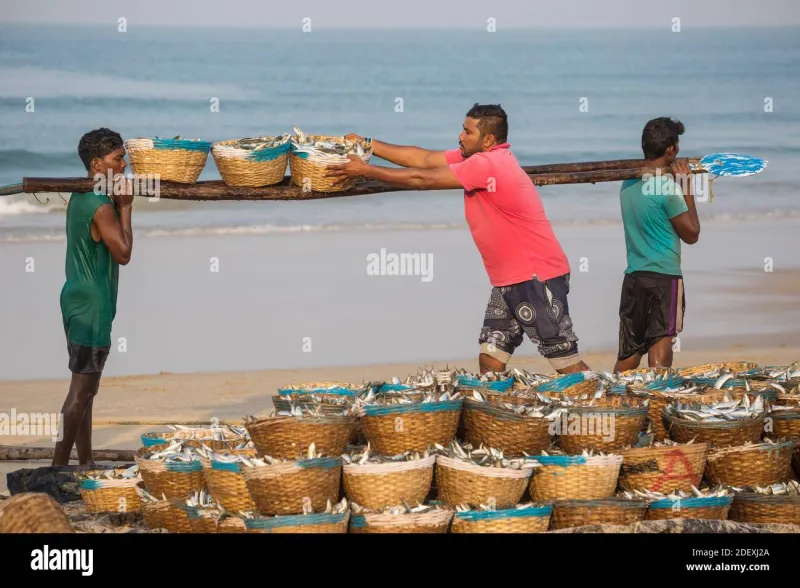
Photo: Sclickp, CC BY-SA 4.0, via Wikimedia Commons
The first time I saw the accounting books at the little guesthouse where I was staying in North Goa, I laughed out loud. There weren't any. There was a notebook, spiral-bound and curling with damp, and inside it were things like: Ravi — two coconuts, owes nothing. Sunita — marigolds Tuesday, we watch her goat while she's at the market. Francis — fish Friday, pending.
That's it. That's the ledger.
I'd come to Goa the way a lot of Americans do — burned out, phone-full, ready to be fixed by two weeks of palm trees. What I didn't expect was to stumble into an economy that operates on a completely different operating system than the one I run at home.
The Coconut Plucker Who Eats Better Than I Do
Ravi climbs the palms behind the retreat every week or so. For this, he receives no salary. He gets lunch — the good lunch, the one with the prawn balchão — plus first pick of the coconuts, plus what the owner calls "standing credit," which means if Ravi ever needs anything, ever, the answer is yes.
When I asked why they didn't just pay him, the owner looked at me like I'd suggested charging admission to a sunset. "He's not a vendor," she said. "He's the person who climbs our trees."
The distinction matters more than it sounds. In the villages around the retreat, roles like Ravi's aren't transactions — they're relationships with a long memory. He plucks coconuts today because his father plucked coconuts for the same family thirty years ago. The arrangement will presumably outlive us all.
Marigolds for Laundry Soap
Then there's Sunita, the flower grower you may have read about in our piece on the five a.m. flower stall. Every Tuesday she arrives with armloads of marigolds and jungle geranium for the courtyard shrine and the breakfast tables. Her payment? A rotating grab-bag of practical goods: detergent, cooking oil, a lift into Mapusa on market day, an occasional plate of whatever the kitchen made too much of.
It sounds quaint until you do the math and realize both parties are getting a genuinely good deal — better, probably, than either would get in a cash transaction. Sunita's flowers would fetch maybe 300 rupees at the stall. The goods and services she receives are worth more to her than 300 rupees in cash, because the soap is always there when she needs it and the ride to market is worth its weight in gold during monsoon.
Nobody draws up terms. Nobody renegotiates. The system has been stress-tested across generations, which is more than I can say for my last apartment lease.
The Fisherman Who 'Owes' a Catch
Francis is my favorite entry in the notebook. Twice a month, weather permitting, he shows up at the retreat's back gate with whatever the sea gave him — mackerel, sometimes pomfret, once a squid so large the cook had to sit down. The guesthouse "owes" him for these, in the loosest possible sense, and Francis "owes" the guesthouse for the time his brother needed a place to stay during a hospital run in Panaji.
The debts are never settled. That's the point. A debt that never closes is a relationship that never ends, and in this part of the world, that's not a bug — it's the whole design.
What This Looks Like From a Lounge Chair
As a guest, you feel this economy without ever seeing it. Your breakfast tastes better because the eggs came from a neighbor's hens, paid for in garden compost and good will. The flowers on your table were traded, not purchased. The fish on your thali arrived via a friendship, not an invoice.
It also explains something I couldn't put my finger on during my first visit: why the place runs on a rhythm that feels impossible to fake. Nobody here is optimizing. Nobody is upselling. The staff aren't performing hospitality; they're extending a hospitality network that existed long before the first guest arrived.
The Hustle Culture Hangover
I'll be honest — the first few days, this drove me slightly insane. My American brain kept trying to find the inefficiency, the angle, the thing that should be a subscription tier. Where's the margin? Who's keeping score?
Nobody. That's who. And somewhere around day five, sitting in the courtyard hammock I've written about before, it hit me that I hadn't checked my email in three days and the world had continued to spin.
Back home, I track everything. Every favor gets reciprocated within a reasonable window or I feel it like a splinter. Every transaction closes. My relationships, if I'm brutally honest, have receipts.
The Goan garden retreat model proposes something different: leave the ledger open. Let some debts stand. Let generosity be slightly unbalanced, in both directions, forever. It's the horticultural version of susegad — that famously untranslatable Goan state of contented ease — applied to money itself.
Can You Take This Home? Sort Of
I'm not going to tell you to show up at your local coffee shop and offer to trade a painting for lattes. That will go badly. But there are portable pieces here:
- Let a favor stay owed for a while. The urgency to settle up instantly can quietly turn friendships into transactions.
- Trade skills, not just money. I now trade website help for my neighbor's tomatoes, and it's the least stressful arrangement in my life.
- Buy from people, not platforms, whenever you can. The retreat's kitchen knows every name attached to every ingredient. Mine barely knows my delivery driver's car.
On my last morning, Ravi came down from a palm with a coconut and handed it to me — the guest, the stranger — and refused anything for it. "Next time," he said, meaning it.
I've been carrying that debt for two years now. I hope I never pay it off.