Three Miles to Breakfast: The Bicycle Vendor Who Feeds an Entire Goan Retreat
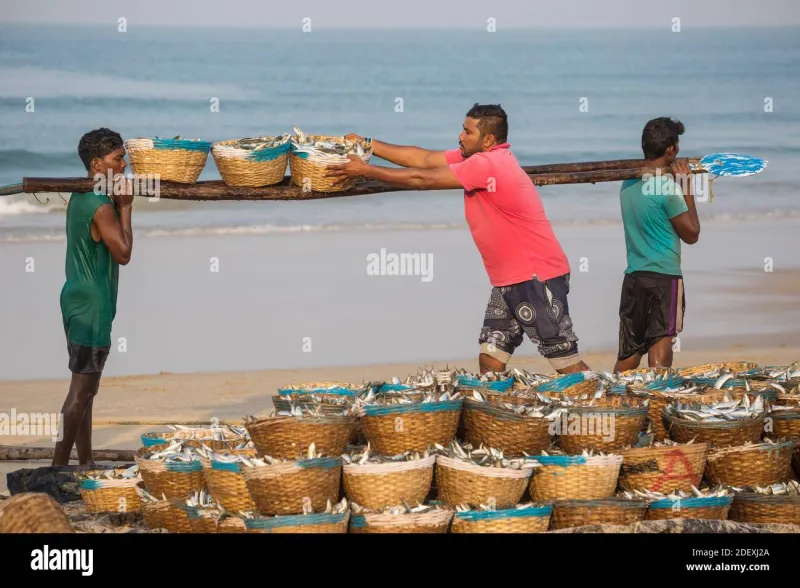
Photo: fisherman bicycle basket fish Goa village morning, via c8.alamy.com
The fish arrives before the coffee does.
That's the first thing you learn at Mandovi Villa, a nine-room guesthouse tucked behind a Hindu temple on the edge of a village outside Assagao. Around 6:30 each morning, while the courtyard kitchen is still lighting its stove, a fisherman named Prakash rolls through the gate on a battered black bicycle, a woven basket lashed to the rear rack. Inside the basket, packed in damp banana leaves, is whatever the Arabian Sea gave him overnight — mackerel, maybe, or kingfish, still stiff with cold.
He doesn't take orders. He never has. The kitchen takes what he brings, and the menu is written around it.
A Menu Written by the Tide
Most American travelers have internalized the farm-to-table idea. We've seen the chalkboards at restaurants in Portland and Austin bragging about their local sourcing. But there's a difference between a philosophy and a supply chain, and at Mandovi Villa, the supply chain is almost comically short.
"Everything on your plate this morning was within three miles at sunrise," the owner, Meera, told me, setting down a plate of fish recheado and red rice. "The fish, two miles. The chilies in the masala, from the hillside. The coconut — that tree, there." She pointed out the window at a palm leaning over the compound wall.
The math is almost absurd. The spice farmer, Anand, grows turmeric, black pepper, and a small plot of kokum on a slope you can see from the breakfast table. He delivers on foot, twice a week, in a cloth sack. The eggs come from a neighbor's hens — you can hear them. The sourdough-style poi bread arrives warm from a bakery four lanes over, ferried by a teenager on a scooter.
The result is a menu that changes daily in ways no chef would dare schedule. Some mornings there's squid; some mornings there isn't. The guesthouse doesn't apologize for this. It treats it as the whole point.
What Low-Mileage Actually Tastes Like
I'll admit my skepticism. I've eaten at enough "hyperlocal" restaurants back home to know the term can be decorative. But the difference here isn't marketing — it's physics. A mackerel pulled from the water six hours before breakfast doesn't need much done to it. A chili picked that morning has a brightness that shipped produce loses somewhere over the Atlantic.
The second morning, I asked Meera why she doesn't just order from a wholesaler like every resort down the coast. She looked genuinely puzzled by the question.
"If I stop buying from Prakash, Prakash stops coming," she said. "Then who is here at six in the morning? Nobody. The garden goes quiet in the wrong way."
That's the part no brochure explains: in a village economy, the supply chain is also the social fabric. The vendors aren't vendors, exactly. They're neighbors whose rhythms the guesthouse is woven into. When Prakash's daughter passed her exams, the guests ate celebratory patoleo that evening — steamed in leaves, filled with jaggery from Anand's cousin's farm.
A Framework for Finding Your Own Three-Mile Stay
You don't have to fly to Goa to travel this way, though I'd argue you should. The real takeaway is a checklist you can apply anywhere — the Azores, Oaxaca, a farmhouse inn in Vermont:
Ask what the kitchen can't promise. A good low-mileage stay will tell you upfront that the menu shifts. If a small guesthouse guarantees the same five dishes year-round, something's being trucked in.
Count the relationships, not the certifications. There's no organic certificate hanging in Mandovi Villa's kitchen. There is a photo of Anand taping a prize-winning pepper harvest to the fridge. Certifications can be bought; a fisherman who shows up on a bicycle at dawn, rain or shine, is harder to fake.
Listen at breakfast. At resorts, breakfast is a buffet hum. At places like this, it's a negotiation — Prakash and the cook arguing cheerfully about whether the mackerel is worth yesterday's price. That argument is the sound of a real supply chain.
Stay small enough to be on the route. A three-mile supply chain only works when the guesthouse is a stop, not a destination in itself. Nine rooms, not ninety.
The Quieter Luxury
On my last morning, I woke at dawn and watched Prakash's bicycle wobble up the red-dirt lane, the sea still on him — salt smell, wet hem, that particular tiredness of a man who's been on the water since three. He parked, unhitched the basket, and traded jokes with the kitchen girl before pedaling off to sleep.
No resort down the coast can buy that scene. It can't be imported, and that's precisely the point. The most luxurious thing a stay can offer an exhausted American traveler isn't a swim-up bar. It's the feeling of having arrived somewhere with a heartbeat — a place where breakfast is a small daily miracle, delivered by bicycle, from no further than you could walk before the heat sets in.
Serenity, it turns out, has a supply chain too. This one runs three miles long.