Drizzle on the Marigolds: The Day I Learned Goans Don't Cancel for Weather
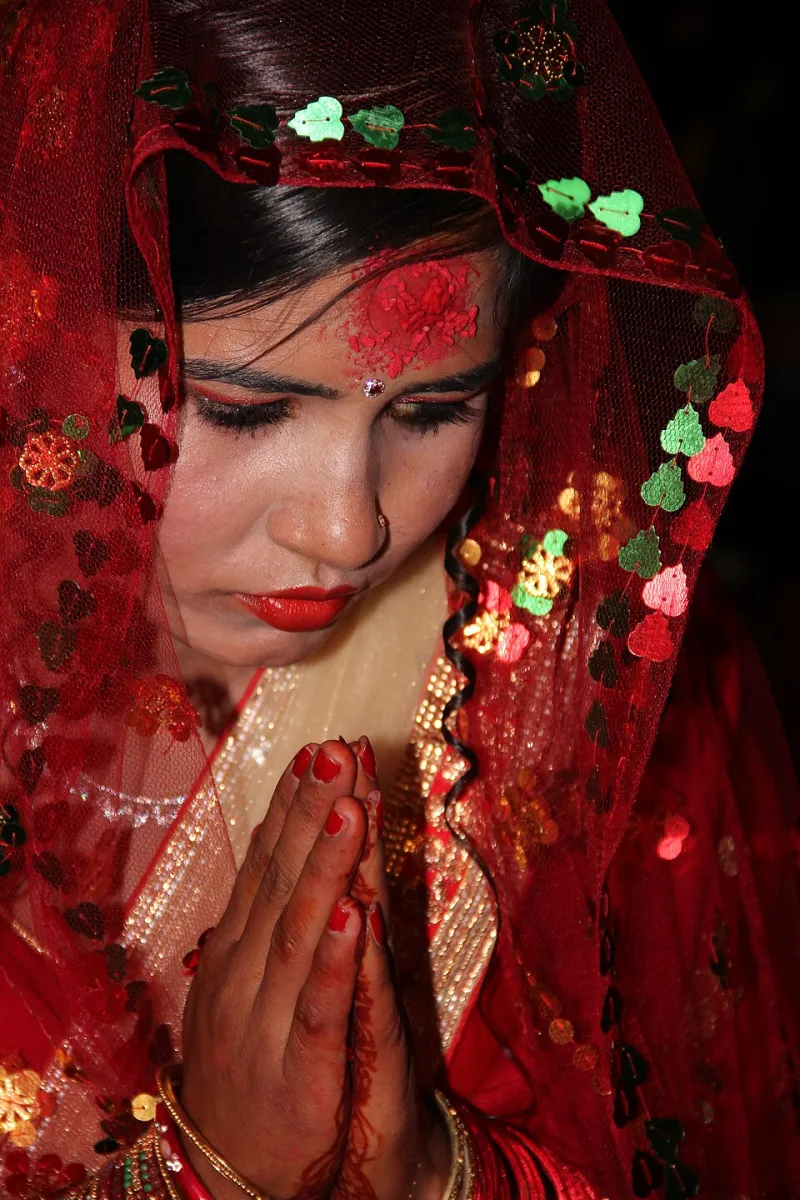
Photo: Nirmal Dulal, CC BY-SA 4.0, via Wikimedia Commons
I check the radar app the way some people check their horoscopes. Back home in Ohio, a 40% chance of rain means a family barbecue gets moved indoors, a birthday party becomes a text-message apology, and an entire weekend can be quietly rescheduled around a gray blob on a screen. So when I stepped out of my guesthouse in Goa and felt that first fine mist on my arms — the mist the forecast had promised all week — my American brain did the math instantly: the wedding I'd been invited to that afternoon would surely be off.
It was not off. It was, as I would learn over the next five hours, never even in question.
An Invitation You Don't Politely Decline
A few days earlier, the auntie who runs the kitchen at the retreat where I was staying had mentioned, in the offhand way she mentions everything, that her niece was getting married. "In the temple garden," she said. "You should come. Wear something nice."
In the US, an invitation like that from someone you've known for nine days would trigger a spiral of worry about imposing. Here, it's simply how things work. Weddings in Goa — especially Hindu weddings held in temple courtyards — often fold in neighbors, guests of guests, the woman who sells flowers at the corner, and apparently, the confused American who keeps overpaying for coconuts. Declining felt ruder than showing up.
So I showed up. Into the drizzle.
Nobody Looked Up at the Sky
The first thing that struck me was the absolute absence of weather talk. In America, rain at an outdoor event is a crisis requiring a contingency plan, a tent vendor on speed dial, and at minimum forty texts in the family group chat. In this garden, the rain was just... there. A soft percussion on the palm fronds. The mandap — the wedding canopy — stood beneath a flowering temple tree, its blossoms so dense they seemed to be doing some sheltering work of their own.
The women had tucked their sarees slightly higher. The men had rolled their sleeves. A cousin handed out umbrellas the way an American wedding hands out programs — casually, without ceremony, to whoever wanted one. Most people didn't take one.
The bride, when she appeared, was radiant in red and gold, and the rain was already soaking the petals scattered on the ground. Nobody moved the ceremony. Nobody rushed the priest. The mantras continued at their own deliberate pace, and the drizzle kept its own rhythm, and the two seemed to coexist without negotiation.
The Lesson My Calendar Never Taught Me
Somewhere around the third ritual I didn't fully understand — I clapped when the people around me clapped, which is my universal strategy for sacred occasions — I realized what was actually happening. This wasn't carelessness about the rain. It was a different relationship with it.
Monsoon isn't a disruption in Goa. It's a season, a character, a fact of life that arrives on schedule every June. The wedding date was chosen knowing full well what the sky does here this time of year. Planning around the rain would be like planning around Tuesday. So Goans plan with it — lighter fabrics, covered walkways, food that tastes better with humidity, and a cultural reflex toward adjusting rather than canceling.
My entire life, I've treated weather as an adversary that owes me a clear day. Here, the weather is a relative who shows up uninvited and gets handed a plate anyway.
The Feast, the Music, the Soaked Hem
After the ceremony came the lunch, served on banana leaves under a long tin roof that hummed like a snare drum with every rain shower. The food — a red fish curry, coconut-laced vegetables, that impossibly good fried thing I ate four of — was worth every minute of standing in line next to strangers who immediately became acquaintances who immediately demanded my opinion on whether the curry was too spicy. (It was. I said so. This was received as high praise.)
A cousin of the bride played a harmonium while the rain did its percussion. Kids ran through puddles between the hedges and were only halfheartedly scolded. My linen kurta — bought that morning for roughly the price of an airport sandwich — was soaked at the hem and spotted everywhere else, and I honestly cannot remember the last time I cared less.
If You Get Invited: A Field Guide
Since coming home, three friends have told me they're headed to Goa, and all three asked the same question: what if someone invites me to something? Here's what I learned, so you don't have to learn it wet:
Say yes. Even if you barely know your host. Even if it's raining. Especially if it's raining. The invitation is genuine, and the worst outcome is a memorable afternoon.
Dress modestly and colorfully. Bright cotton or linen works. Shoulders and knees covered for temple grounds. Skip black and white — festive occasions want color. And accept the possibility of a stained hem; the drizzle will find you.
Bring something small. Sweets or fruit are never wrong. Nobody expects a gift from a traveler, but the gesture lands.
Follow the crowd's lead. Stand when they stand, eat when they eat, remove your shoes where shoes come off. Clapping at uncertain moments has a 100% success rate in my experience.
Don't apologize for the rain. It's not a flaw in the plan. It's part of the plan.
Staying Dry Is Overrated
I flew nine thousand miles to a garden retreat for silence and slow mornings, and what I remember most vividly is standing in a warm drizzle watching two families sing through it. Back home, the radar app still runs my weekends. But there's a new file in my brain now, a small one, labeled Goa: the rain is not a cancellation. It's an instrument.
The next time a gray blob rolls over my plans, I hope I hear marigolds in it.